Research · Insect
Hawkmoths & flies
From sensory input to motor output
How do sensory codes adapt to changing statistics, and how are they converted into motor commands?
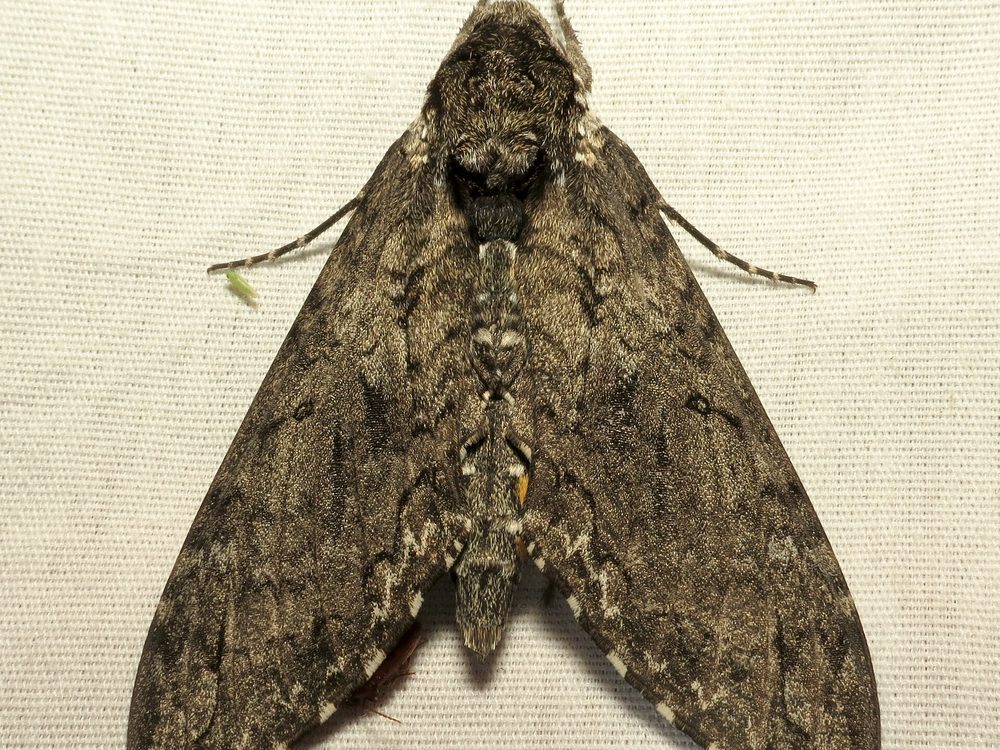
In collaboration with the Daniel and Dickinson labs, we are interested in how sensory inputs change when animals are engaged in active behavior, and how they are converted into motor commands.
Flying insects make fast, precise corrections using vision and mechanosensation. We study how these signals are encoded, how the code adapts to the statistics of the input, and how muscles combine to produce control.
Selected papers
- Sponberg, Daniel & Fairhall (2015). Dual dimensionality reduction reveals independent encoding of motor features in a muscle synergy for insect flight control. PLoS Comput Biol 11, e1004168.
- Schnell et al. (2014). Cellular mechanisms for integral feedback in visually guided behavior. PNAS 111, 5700–5705.
- Fox, Fairhall & Daniel (2010). Encoding properties of haltere neurons enable motion feature detection in a biological gyroscope. PNAS 107, 3840–3845.